 A couple of weeks ago, I posted about Jamie Oliver’s Food Revolution. While I continue to be a huge supporter of what he’s trying to accomplish (namely getting Americans to eat real food, made in their own kitchens, more often), I was less than impressed with his appearance on Dr. Sanjay Gupta’s Fit Nation show on CNN this weekend…
To begin, the two of them went to a grocery store where Jamie was supposed to outline his shopping recommendations for families, before returning to the studio for more Q&A. I was watching while I was on the elliptical machine – in fact, I extended my workout to catch this piece that CNN had plugged – and I was so disappointed in the whole thing.
Jamie has center stage in America right now on the topic of healthful eating, and he’s earned it with a host of food-related credits to his name. He grew up in the restaurant business and had his own TV show (The Naked Chef) by the time he was 25. He’s published a number of cookbooks, has his own magazine, owns multiple restaurants, and has become quite a food activist in recent years. All this to say he has EARNED the stage he’s enjoying with his Ryan Seacrest-produced 6-episode show. Yet his answers to pretty easy questions from Dr. Gupta really missed the mark. I found myself thinking “How do I get my hands on that microphone?” And then I remembered my blog….
So here goes – should CNN ever decide to ask me any of the questions they asked Jamie, here’s what I’d say!
Q – Cherylanne, if I’m in charge of grocery shopping for a busy family, what are the top 3 things you’d tell me to think about when I get into the store?
A – The first thing I’d say is to think BEFORE you get to the store! Having a plan and a list before you shop is absolutely critical to your success throughout the week. Second, I’d say to load up your cart with fresh foods by shopping the perimeter of the store, where all the produce, meat, dairy, and seafood is located. Most of the highly processed foods are housed in the aisles, so shopping mostly the perimeter is one easy way know you’re getting the most wholesome ingredients for your family. Third, I’d plan for most dinners to include a protein, a high-fiber whole grain, and at least one vegetable or fruit. That way, if you keep your freezer stocked with good quality, lean proteins (chicken, fish, lean pork, lean beef, beans, tofu) that you buy in bulk, and your pantry stocked with high fiber whole grains (brown rice, quinoa, whole wheat pasta, high fiber whole grain breads and crackers, sweet potatoes) then most of your “weekly” shopping trip can be focused on fruits, vegetables, and dairy. This makes shopping a breeze and you are never more than a few ingredients away from a healthy dinner!
Q – What about all that stuff in the middle aisles…don’t we need some of it? I mean, it takes up about 90% of the store real estate!
A – I’m most concerned about the heavily processed “convenience foods” that fill the aisles. If you are a savvy label-reader, you can certainly incorporate some items from the center aisles into a healthful diet. For example, cold breakfast cereal is one thing most homes in America have on hand. But the range of nutritional density up and down that aisle is staggering. Read labels! Look for high fiber, low sugar cereals that will start your day with a boost of slow-burning energy. Many (okay MOST) cereals, even the ones labeled “Whole Grain” by food marketers, are just the opposite – high in sugar and low in fiber. Beyond that, frozen vegetables can be real time savers for busy families and as long as they are not prepared with sauces, they can be every bit as nutritious as fresh vegetables! Pasta, rice, spices, canned beans, and broths are all in the center aisles and make it into my family’s cart nearly every week.
Q – Doesn’t it take a lot of TIME to cook if you are doing it without convenience foods? Between work and my kids’ activities, there is barely any time to put a meal on the table!
A – There are so many dinners that can be on the table in 15 minutes or less. As you plan your week, you’ll see where your crunch points are and can choose the simplest meals (or leftovers!) for those nights, and save any meals that require more preparation time for the weekends or for nights with fewer activities. I think if you can grill a piece of meat, bake a potato in the microwave, and steam a vegetable or toss a salad, you are about 15 minutes away from dinner any night of the week.
Q – What’s the biggest mistake people make when grocery shopping?
A – I think one of the biggest mistakes is believing the food marketing claims on the front of packages. Today, nearly EVERY food in the store that has a package is making a health claim – like “whole grain” or “zero trans fat” or “all natural”. But the truth is actually revealed not on the front label, but in the ingredient list and nutrition label. For example, even if the front of the package says “whole grain”, if there are less than 3 grams of fiber per serving, you really can’t feel like there are enough whole grains in there to matter! I encourage people to become savvy label readers before they settle into routinely purchasing an item for their family. It really makes a difference!
So there you have it…a bit of my first mock interview with CNN…what other questions would you ask if YOU were the reporter? Maybe I’ll do future Q&A posts here to practice!

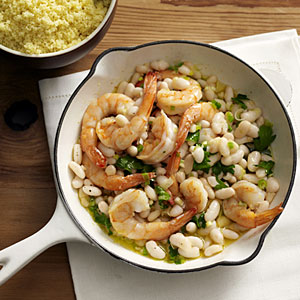 THIS is what you should make for dinner this weekend! (If I do say so myself.) I ripped this recipe out of Health magazine a while back and have been passing over it in my recipe file for far too long. It finally made the cut this week…and WOW…I’m so glad it did! My kids scarfed it down, my husband raved about it, and I’m already planning for the next time I can make it. Yum. As if that endorsement weren’t enough, this takes 10 minutes of prep time and cooks in about 5 minutes. Amazing.

