
How’s that working for you?

Last week, I enjoyed a visit from a dear friend I haven’t seen in a long while. I love this woman, for (among other things) her sharp wit, her abundant love for my children and our shared obsession with fabulous food…and champagne! Let’s call her “Beth.” As often happens these days when anyone spends more than ten minutes with me, we got into a discussion about food and health. Beth was lamenting her need to lose several pounds and noting that she had very little energy, especially early in the day.  I empathized with her….after all, these are things I hear fairly regularly from clients.

In the very next breath, perhaps to demonstrate that she’s not just passively accepting her fate, but rather is actively committed to achieving her goals, she began to rattle off a number of her eating habits, including always skipping breakfast “because she’s just not hungry in the morning” and often skipping lunch as well. It’s as if she were saying, “All this discipline and still no weight loss? The injustice of it all!”  Hmmm.

I’m sure on some level she wanted me to say, “Well good for you, my friend! Just keep doing what you’re doing and I’m sure the weight will  fall off any day now.” But, thinking back to how the conversation began, I simply asked, “Well, how is that working for you?”

And I was met with a surprised silence. Followed by a burst of laughter and the words “Well, I guess it’s NOT really, is it?!”

Remember? The whole conversation began with her talking about her discontent with the current state of affairs. With how desperately she wished she could look or feel better!

This disconnect between our perception of our behaviors and results those behaviors are actually giving us is really important. It’s where my work with clients often begins. Someone decides that a certain behavior (e.g. skipping breakfast) MUST be the way to lose weight. And she continues to repeat the behavior, even though it’s NOT delivering the results she wants, thinking that one day it will work!  But when what you’re doing isn’t getting you the results you want, one of two things is happening. Either:

1) Your perception of your behaviors is distorted, or

2) Your behaviors aren’t actually serving your goals.

Let’s use Beth as an example. If she skips breakfast every day to save the calories, but then succumbs to the donuts in the break room or the pastry at Panera at 10AM  because her body is literally starving, did she really skip breakfast? Or did she just delay it until she makes a convenient but unhealthy choice mid-morning?

Or, if she thinks that skipping breakfast is a good way to save calories, but doesn’t realize that this habit is putting her metabolism into a conservation mode and actually preventing her from burning calories (while robbing her of energy),  is the practice really serving her weight loss goals?

Here’s the bottom line. If you’re not getting the results you want, maybe it’s time to take a harder look at your behaviors.  Think about what you tell yourself you’re doing to be healthy. Then, look in the mirror and ask yourself, “How’s that working for you?”


PS – I’m happy to say that “Beth” reports she’s been eating breakfast every day since our visit, and she can’t believe how good it feels. She’s  beginning to reconnect to the feelings of both hunger and satisfaction – and is now actually looking forward to that morning meal! Bravo! One simple change at a time…
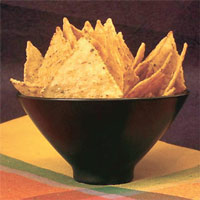
Snack wars – Tortilla Chips vs. Pretzels

Yesterday, I was on a Grocery Store Training Field Trip with a client who had a big “Aha” moment that I thought was worth sharing in the blog.  During a training field trip, we spend about two hours in a grocery store or Whole Foods learning how to make healthier choices within each food category and discovering new foods to try at home. We usually spend most of our time in the produce, meat, organic, and dairy sections but we make our way up and down the center aisles as well.

When the “aha moment” occurred, we were walking through the Salty Snack aisle and she’d just told me she doesn’t often buy chips, but does buy pretzels. She was interested in knowing if I recommended a particular brand or variety. I think my answer surprised her!

I pulled a bag of pretzels (any brand will do) off the shelf and then a bag of tortilla chips. And we read the labels together.

And a one-ounce serving of pretzels provides:

  • 100 calories
  • 0 grams fat
  • 680 milligrams sodium

A one-ounce serving of tortilla chips adds up to:

  • 140 calories
  • 7 grams fat (1 gram saturated)
  • 125 milligrams sodium

If you grew up in the “Low Fat = Healthy” era like both of us did, you’d choose pretzels every time. Right? C’mon, you know you would! But that’s only a piece of the story. Reading the ingredient lists reveals the rest.

Pretzels are made of mostly white flour and a LOT of salt; plus the rather lengthy ingredient list also includes stabilizers and yeast and sugar. Pretzels, nutritionally speaking, are basically mini loaves of white bread.

Tortilla chips, by contrast,  have just three ingredients: corn, oil, and salt (and usually far less salt than pretzels). They are essentially vegetables cooked in oil.

Why does this matter? Because our bodies metabolize pretzels as white bread but we metabolize tortilla chips as vegetables (corn) cooked in oil. Which do you think is healthier?

Note that I did not say that tortilla chips are lower in CALORIES than pretzels. Ounce for ounce, they’re not. But the fat in them helps to create a feeling of fullness and satisfaction that naturally regulates appetite. Said another way, we’re satisfied with fewer chips because they contain some fat.  And we often eat them with salsa which really is health food –  it’s almost always made entirely of vegetables – low calorie and fat free.

So, while pretzels are a favorite snack in many homes, and most parents readily feed them to children thinking they’re a healthy choice, there are actually far better options in the snack aisle. Tortilla chips are one of them. And plain potato chips are another (three ingredients again – potatoes, oil and salt!)

I’m certainly not saying you should never eat a pretzel, but when you do choose them as a snack,  it’s best to combine them with something  that will provide a little protein or fat to help make them more satisfying (e.g. cheese, peanut butter, even sour cream).

The best news is that if you or your kids love chips and salsa, it’s a choice you can feel good about, as long as you keep portions within reason. Now go get busy making plans for tomorrow’s happy hour…

The Art of Handling Criticism Gracefully

Here’s a Guest Post I’m thrilled to share – it’s well-crafted advice on a universally important topic. How often we let criticism affect us at our core! A number of years ago, it became very clear I needed to work on strengthening my resilience. Learning to recover quickly from criticism with my soul in tact required a concerted and sustained effort, but it’s been a life skill worth building.  See what Leo has to say about it.

Post written by Leo Babauta of ZenHabits

If you’re going to do anything interesting in the world, criticism is an unavoidable fact. You’ll be criticized, because you’ll make mistakes, because some will be jealous, because people have opinions about anything interesting, because people want to help you, because some want to drag down those doing anything different. The trick to navigating the icebergs of criticism is to figure out which are helpful, and steer clear of those that aren’t. And above all, do it with grace.

Criticism on Zen Habits

Once Zen Habits started to take off — I had 26K subscribers at the end of my first year in 2007 — I received all kinds of criticism. Many of them were from new readers, who were mostly incredibly positive and encouraging, but who sometimes would leave scathing comments on a post. I learned a tactic that worked extremely well. If a comment was mean, I’d take a minute to calm myself down, and then ask, “Does this person have a point (despite their rude tone)?” Then I would respond and thank the commenter for his criticism. I’d acknowledge their point without being defensive. I’d respond with my reasoning, if I felt I had a point, or if the critic was right I would agree and let them know I was going to change things. Either way, I was grateful for their criticism.

This had a startling effect: the commenter would often respond very positively. Thanking the commenter and acknowledging their point is disarming. People who leave rude comments don’t expect you to listen to them, much less be grateful and empathetic. I had many of my critics become friends after doing that — I’ve never seen a tactic have better results. I’d also get criticism from other sites. My usual response has been to ask myself (again, after calming down), “Does this person have a point?” If they do, I’ll see what I can do to change. If not, I’ll move on. I’ve learned that criticism is a fact of the game. I can respond with anger, or let it stop me from doing things, or I can let it help me. Or accept that it’s there and move on. I choose the last two.

How Not To Handle Criticism

Criticism can bring you down if you let it. People get discouraged when faced with criticism, and just give up. That can be understandable, but why let the words of someone having a bad day (or month) stop you from doing something great? What would have happened if Shakespeare had stopped writing the first time an audience member jeered one of his lines? Or if Gandhi had given up just because the Brits weren’t happy with his ways? Often people will instead respond to criticism with anger. They’ll lash out, attack, become defensive and aggressive. If you haven’t read this now-infamous comment thread for a review of an indie book, I highly recommend it. The review is fine, but the comments left by the author of the book are simply incredible. She’s a train wreck that you can’t look away from. This is how not to respond to criticism. It was the worst way to react. If you’re angry, you do not tell people to f#&$ off. You do not attack them, blame them for your mistakes, deny that you made any mistakes, and feed fuel to the fire by compounding your mistakes with more mistakes. It would be so much better just to stay silent.

Do Amazing Things

Don’t let criticism stop you from doing anything. If someone tells you that your writing sucks, keep doing it. Make it better. Study people who do it well and rip them off, then make it your own and let your voice infuse what you do. Be great by being honest, by seeking the truth and telling that truth when no one else will. Create amazing things. Contribute to the world, make the version of the world you want to see. Go out and do something different. Don’t do things just because everyone else does it. Here’s a secret: If you find yourself swimming along with all the other fishes, swim the other way. They don’t know where they’re going either. Do something amazing, and share it with the world. Criticism can be necessary, but often it is just dragging down the people trying to do amazing things. Don’t let it stop you.

How to Handle It Gracefully

Calm yourself down before responding. Always. Responding to a critic in anger is never, ever, ever a good idea. In case I didn’t make that clear: don’t ever ever ever respond in anger. Ask yourself why the criticism was made. Is the person trying to help, to make things better, to help you avoid making mistakes, to suggest positive improvements? Is the person just in a cranky rude mood, having a bad day? Is the person just mean, or jealous? Is there good reason for the criticism?

Regardless of the motivation, ask yourself if there is validity in the criticism. Sometimes there really is, but instead of letting that get you down, let it help you improve. Admit that you’re not perfect at what you do (though you are perfect), and that not everything you do is exactly right, and that you want to improve. I, for one, certainly make mistakes all the time and have a lot I can improve.

Thank the person offering the criticism. Sometimes they’re coming from a place of wanting to help you. That takes courage, and is a very generous thing. Be grateful for that. Even when they’re not trying to be helpful, they’ve taken the time to respond to you — and trust me, getting a response is better than absolute silence. Provoking a reaction means you’ve done something interesting — and for that, you should be thankful. Either way, thanking the critic will help lead to a positive exchange.

Respond rationally and calmly. Instead of being defensive, be honest. Share your reasons, acknowledge the other person’s points if there’s any validity, and come to a rational conclusion rather than jealously guarding your way of doing things. Or stay silent. If you can’t respond with grace, then just don’t respond. Silence is a much better response than anger or defensiveness or quitting.

Carry on. You’ve responded gracefully, now get back to doing your amazing things.